
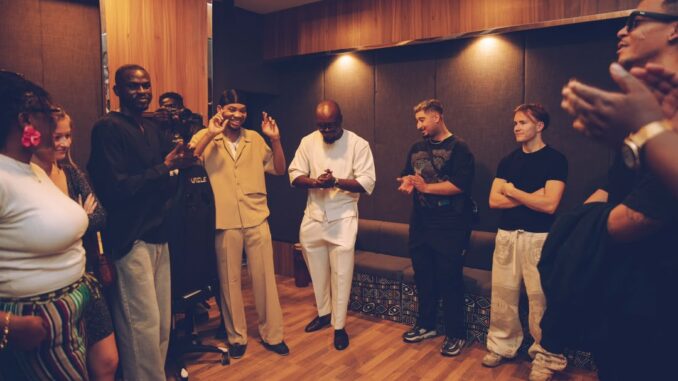
Kizito Ahams joined the call from Geneva, Switzerland. He had just come off a full day of meetings at a conference exploring the intersection of AI and the creative economy, agriculture, education, music, all of it. He was tired. He was also, unmistakably, still thinking.
That combination, exhaustion and intellectual restlessness, turned out to be exactly the right entry point for a conversation about what it actually takes to build something like Afrocroiser from the ground up.
Kizito is Mavin’s Senior Manager, Licensing and Publishing – and the person who conceived the idea for the camp nearly two years before the documentary dropped. By his own admission, he is not the person you see in the front of the frame. But without him, there is no frame.
I caught up with him the evening after a long travel day.
You mentioned the idea for this camp started about two years ago. How did it actually come together?
“I had early interactions with some of the leaders at SACEM a little under three years ago. I was invited for a speaking engagement, and they happened to be in the same territory. After the speaking engagement, we struck up a conversation and built a relationship. We just knew that we had to do something together. SACEM is the oldest performance rights organisation in the world, and, given their excitement about what is going on in Africa and Mavin, I figured there must be common ground for us to do business together. But you know how these things work. There has to be the right time, the right partner, the right budget, all the stars aligned. So, we decided to host them this time around, and to elevate it, we sold the vision of making it a more experiential, cultural exchange programme rather than just a music programme. I got Jimmy on board as the creative guy. We had weeks and months of preparation, along with several meetings with SACEM and the French Embassy. And then they came aboard.”
Many people watching the documentary will see the creative side. But you were managing contracts, splits, IP. How did you balance the business side without killing the creative energy in the room?
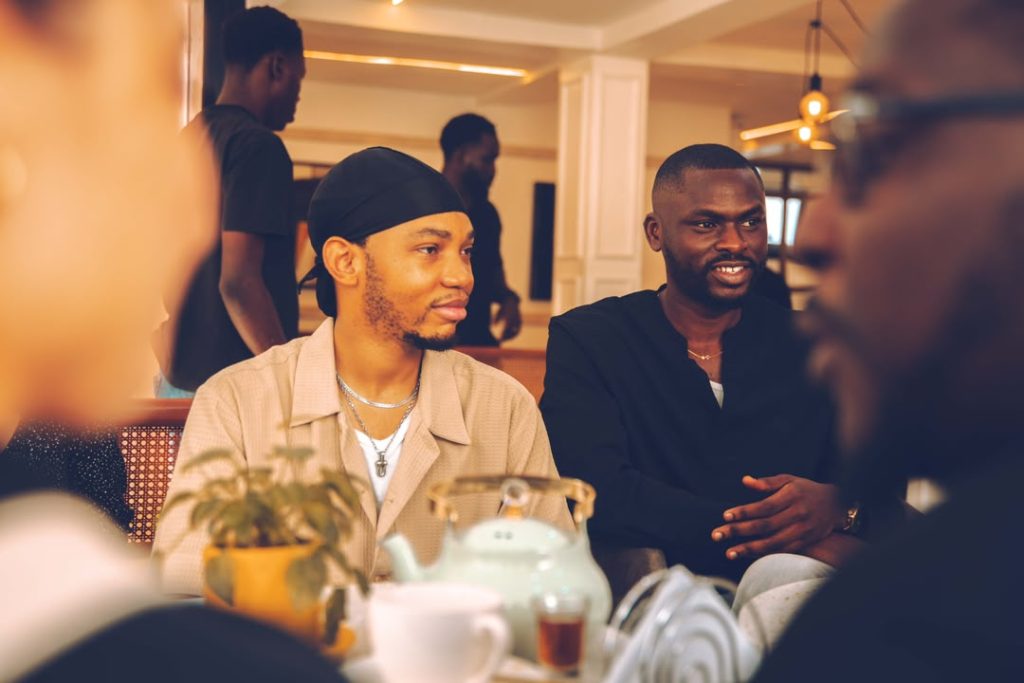
“Creatives naturally have the behaviour of wanting to say, hey, let us do this, vibe out, what comes out comes out. But because we were working with people from different demographics, different cultures, we had to educate them early. We signed splits early and negotiated percentages for everybody who would contribute to a record before they even started recording music. We had the French producers sign before they came around. We had the Nigerian talents sign when they joined. Because you do not want to put out a record tomorrow, it has a billion streams like Calm Down, and then people start fighting about credits. The hallmark of what we are doing is protecting their rights and exploring more innovative ways to exploit their intellectual property. Creativity and business can go hand in hand. That is how I see it.”
You talked about having a soft spot for the people behind the scenes, the songwriters and producers who do not get the flowers. Is that what this documentary is ultimately about?
“Without the songs, there is no music. Without the melodies, without the lyrics, without the beats, there is no music. The songwriters are still the most important people in the music industry because everything starts with them. I am passionate about making sure they are better positioned, well represented, and achieve success. And I want to be a conduit, a bridge that connects them to the right opportunities. We also want to demystify some myths about songwriting in the Afrobeats space. Sometimes people think songwriting means writing words on paper and emailing them to an artist. But sometimes it starts from a melody. These guys record the song from start to finish so the recording artist can even hear it, like it, and then put their own spin on it. That is the story we want to tell.”
What do you hope Afrocroiser achieves in the bigger picture?
“I want people to remember that Afrobeats is boundless. There are no territorial limits to how far our music can go. And I want people to know that Nigeria can be a home for collaboration. Our talents are multi-talented. There are phenomenal videographers, cinematographers, and content creators here. When Burna Boy does a song that approaches a billion streams, it is not just Burna Boy. It is the music executives, the business managers, the lawyers, the content creators, and the band. It takes a village. We are trying to say that we can tell these stories too, even though we are not at the forefront. Through the work we put in front of you, you can appreciate how the industry is growing and think about the people behind the scenes who make it possible.”
Kizito ended the conversation by mentioning Terry Cruise dancing to a Nigerian song in a film, and FIFA inviting the artist to perform at the World Cup because of the sync placement. He used it to make a point that landed quietly but stayed with me. Sometimes people hear African music for the first time through a film, an advert, or a scene. The creative industry is still one of the most powerful ways to export culture worldwide. And the people making sure that music is properly placed, properly credited, and properly compensated are the ones working at the back end, largely invisible, entirely essential.
Kizito is one of those people. Afrocroiser’s argument is that they deserve to be seen.
Achieve Your Desires
(In Your Undertakings)
Business world. Career. Private or government work. Selection/approval. Elevation/ promotion. Leadership position. Power of command. Leadership tussle. People/crowd. Favor in high places. Breakthrough. Etc. Quick results without blemish. A trial is enough to convince you. For spiritual consultation, guidance, solutions, call/Whatsapp Dr. J.A. Faros on 07030514063. Unlimited power of God.
Be the first to comment